European Wall Mirror Ideas for Bathrooms and Dressing Rooms
Nathan Brown · 6 min
Start with the Room’s Daily Routine
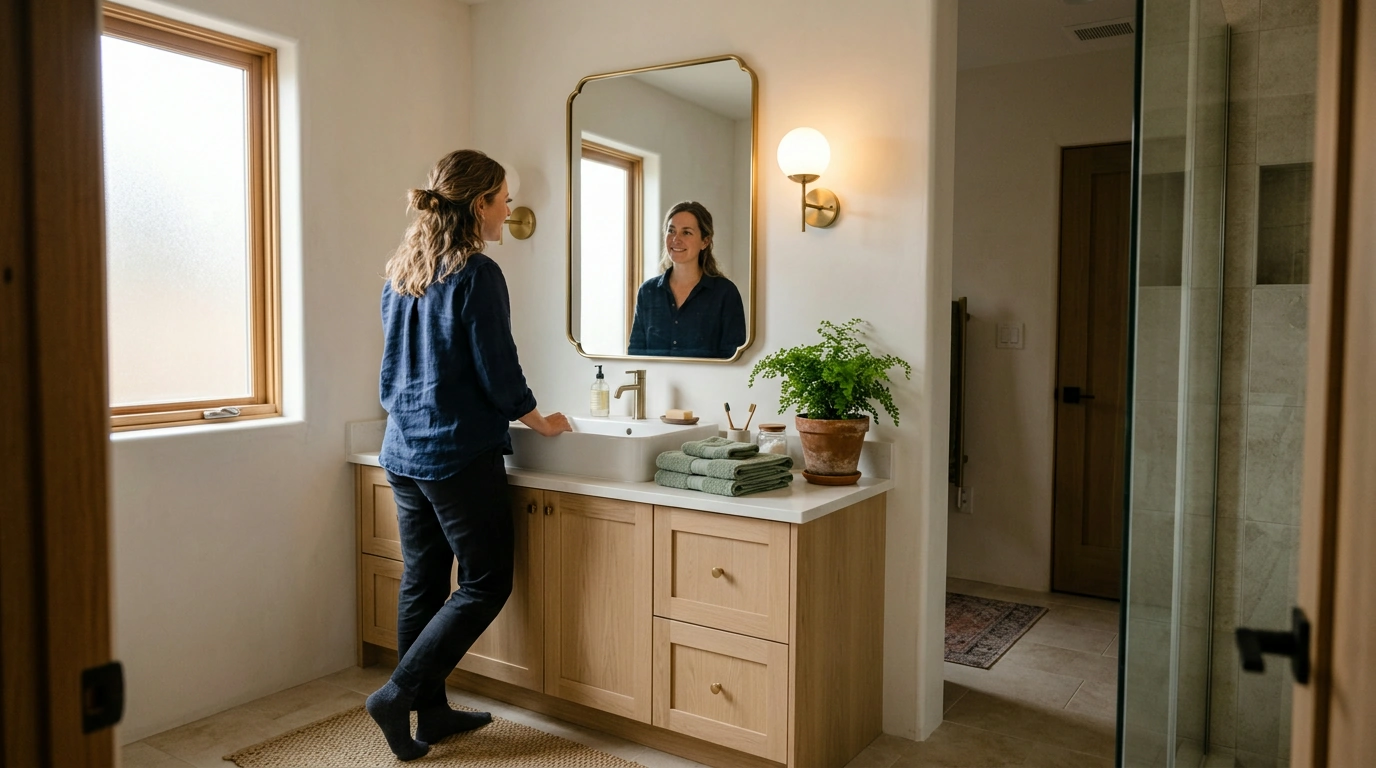
Begin with the people who will use the mirror. At a vanity, stand where you normally wash your face or get ready and identify the view you need. In a dressing room, consider whether you usually stand at a counter or sit at a table. A shared space calls for an extra check: a position that feels natural for one person may be less useful for someone else.
Keep frequently used items within reach without letting them crowd the mirror. A small tray can gather daily essentials, while a cleared stretch of counter gives you room to work. If you are planning an accessible bathroom, consult the ADA Accessibility Standards for mirrors rather than relying on a decorative placement rule.
Planning the Mirror’s Place
Setting
Placement priority
Styling approach
Bathroom vanity
Center the view around the sink and daily tasks
Keep nearby accessories restrained
Dressing area
Position it near the getting-ready surface
Layer with a lamp, tray, or artwork
Shared space
Check sightlines for everyone who uses it
Choose accents that suit the wider room
Test the Light Before Choosing a Spot
Mark a possible position on the wall and look toward it while standing or seated as you normally would. Notice what the mirror would reflect: an open wall may feel calmer than a crowded shelf. Repeat the test during the day and at night so a window or fixture does not surprise you with glare.
For getting-ready tasks, aim for light that reaches your face evenly. If your plan involves changing electrical fixtures or wiring, bring in a qualified professional.
Featured in this guide
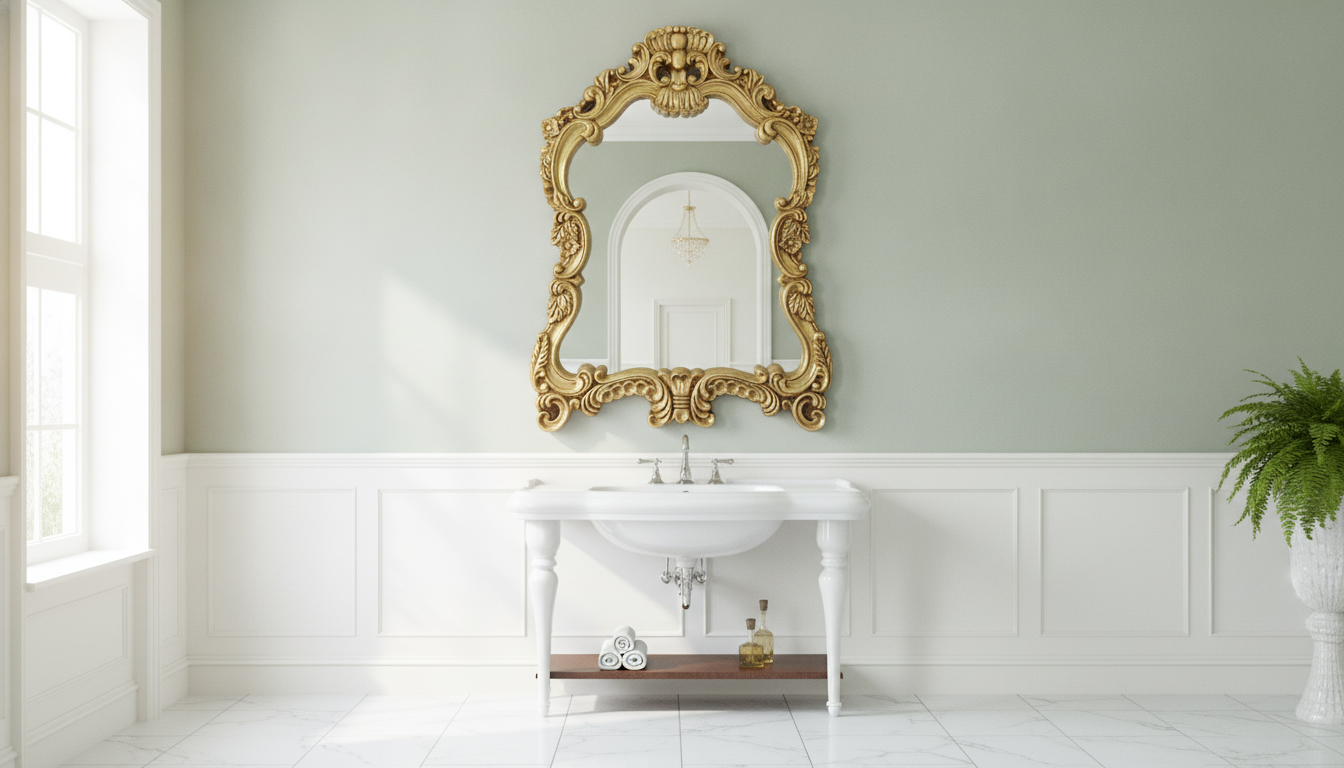
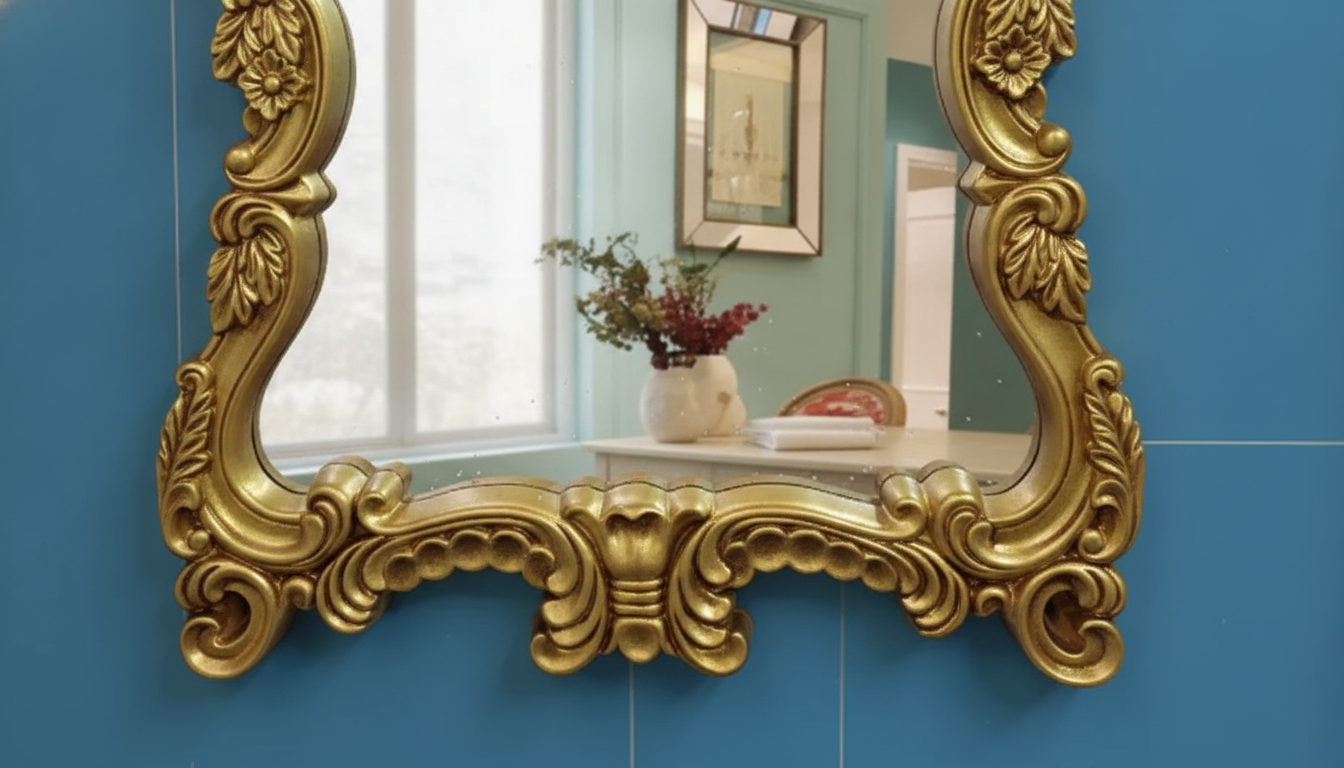
European Wall Hanging Decorative Mirror for Bathroom and Dressing Room
For a European-inspired feel, we favor proportion over a crowded collection of accents. Leave open wall space around the mirror, then add a few pieces that suit your routine: perhaps a tray for daily essentials at the sink, or a lamp and framed art in a dressing area. Keep the counter easy to clear and clean.
For nearby household cleanup, our Premium Checkered Kitchen Cleaning Cloths are an option for appropriate surfaces. Follow the care directions for both the cloths and the surface.
Make the Practical Checks
Measure the available wall area, allowing space for nearby fixtures, doors, and cabinets to operate normally. Then confirm the mirror’s current dimensions, weight, hanging requirements, and care guidance on its product page before you purchase or drill. Those details determine whether your preferred position is practical.
Mounting hardware should suit both the wall construction and the mirror’s actual weight. Drywall, masonry, and other wall types call for different approaches, and an uncertain wall is a good reason to seek qualified help. Do not let a pleasing arrangement take priority over secure mounting.
In a bathroom, consider where water may splash and whether the room has effective ventilation. Moisture affects more than the mirror: it can also influence nearby finishes and stored items. The EPA’s guide to mold and moisture at home offers practical context for controlling dampness. Plan routine cleaning around the product’s care guidance, and leave enough access to wipe the surrounding wall and counter.
Finish with a Space That Feels Ready to Use
Make the final decision in four steps: name the primary task, test the sightline, evaluate the lighting, and select a few complementary accents. That sequence keeps the room useful while giving its decorative choices a clear purpose. When you are ready, review the featured mirror’s current details and compare them with your wall space and preferred look.
Before choosing, compare the product details with your daily routine, available space, care needs, and preferred setup. The strongest option is usually the one that fits the intended use clearly and remains simple to clean, store, and check before repeat use.
FAQ
What are the wall hanging things called?
Wall décor is the broad term. Depending on the piece, you might call it a wall mirror, framed art, a tapestry, or a wall hanging.
What is an embroidered wall hanging called?
It may be called embroidered wall art, an embroidered textile, or an embroidered wall hanging. “Tapestry” is sometimes used casually, though it traditionally refers to a woven textile.
What are the main styles of European art?
Major examples include Renaissance, Baroque, Neoclassical, and modernist styles. You can borrow a general mood for your room without reproducing any one historical period.
See if European Wall Hanging Decorative Mirror for Bathroom and Dressing Room fits your setup









Leave a comment