20% off on product page · save $3.00
How to Build a Stylish Barn Door on a Budget
Measure the width and height of the opening, including any trim you want the door to cover. Plan for overlap on both sides and above the opening so the closed door provides the coverage you want. A barn door sits in front of the wall rather than inside the frame, so expect some gaps around its edges.
Next, measure the clear wall space beside the opening. You need enough uninterrupted space for the door to slide open without hitting switches, outlets, furniture, or projecting trim. Consider where the handle will sit and whether the door will block access to anything when open.
Find suitable structural support for the track before settling on a design. The track and door need secure mounting, so identify the framing and follow the hardware manufacturer’s requirements. If the existing wall cannot provide the specified support, consult a qualified professional about a suitable mounting solution.
Set a budget for lumber, sliding hardware, fasteners, finish, and tools you may need to purchase.
Your material choice affects the door’s appearance, weight, and total cost. Prices vary by location and size, so compare local options against your measurements rather than assuming one material is always cheapest.
Barn Door Material Options
| Material | Budget advantage | Consideration |
|---|---|---|
| Plywood | A single sheet can form a simple door panel | Edges may need finishing or trim |
| Pine boards | Often an affordable solid-wood choice | Boards should be straight and dry |
| Reclaimed wood | Can be inexpensive when available locally | Check for damage, embedded fasteners, and uneven thickness |
Plywood is a straightforward choice for a painted panel, while pine boards give you a solid-wood look. Reclaimed wood can add texture, but the time needed to clean and prepare it may offset some savings. Avoid damaged pieces and remove embedded fasteners before cutting or sanding.
Whatever you choose, estimate the finished door’s weight, including trim and hardware attached to it. Select a track rated for that weight and compatible with the door’s thickness. Simple trim or a painted finish can give an inexpensive panel a finished look without decorative boards.
Featured in this guide
DIY Barn Doors: How to Build a Stylish Sliding Door Without Breaking the Bank | Budget-Friendly Barn Door Building Guide | How to Build a Barn Door on a Budget
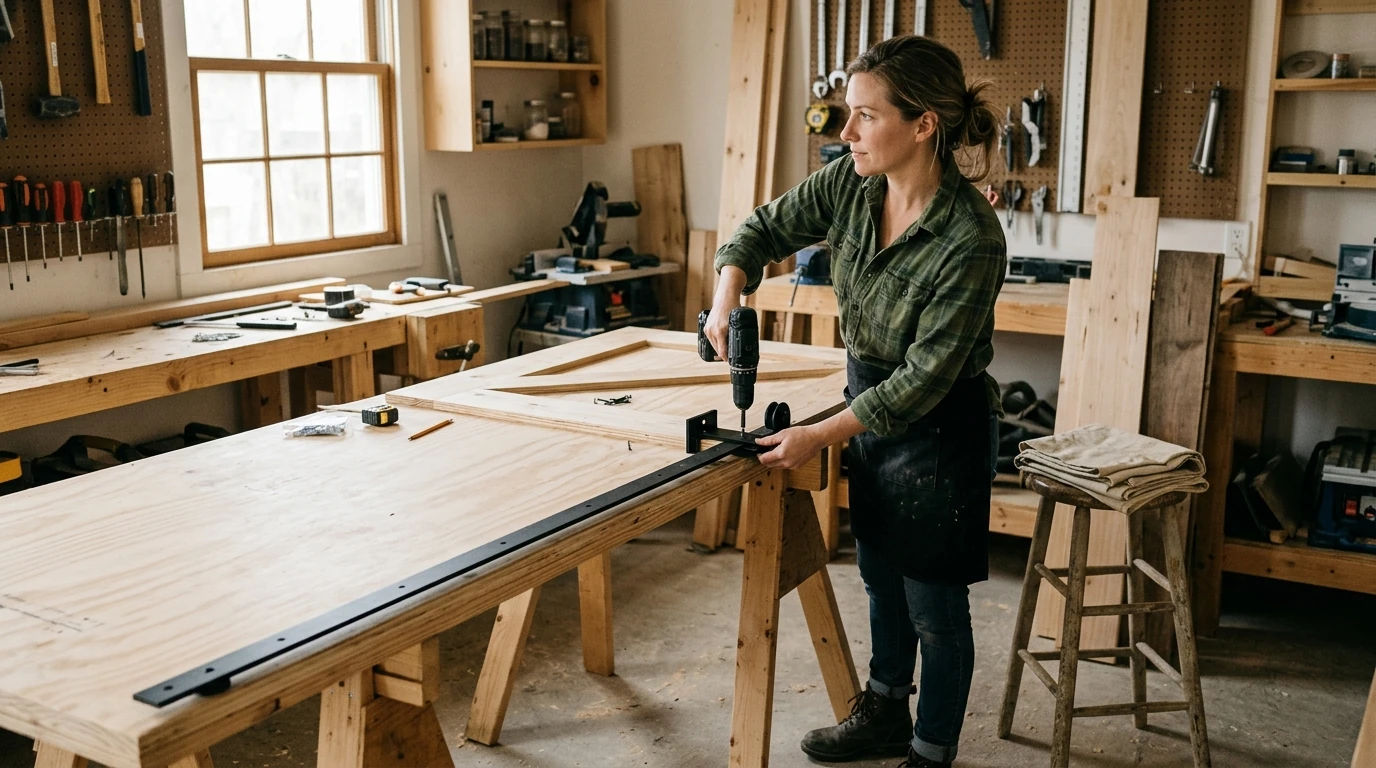
Mark your dimensions carefully and cut the panel or boards. If joining boards, use a construction method suited to the material and design. Check the assembly for square by comparing its diagonal measurements.
Add any necessary bracing or trim, leaving room for the hanging hardware. Include that extra weight in your track calculation and make sure fasteners do not protrude through the opposite face.
Sand the surfaces and edges, remove dust, and apply paint or sealer according to the finish manufacturer’s directions. Review tool safety guidance and wear eye and respiratory protection appropriate to the work and materials.
Compare complete hardware kits and add any required mounting supplies, handle, finish, and tools to your estimate. A standard-size panel may reduce waste, and suitable leftover wood can work for trim. Our DIY Barn Doors guide can help you organize your budget-conscious build.
Watch · product page video
“Just finished my barn door project and WOW! 😍 This guide made it a breeze. I was worried about the cost, but this kept me on budget without compromising style.”
Obsessian product page · Product review
Compare related options such as Calm Kitty Firework Survival Guide: A Printable Checklist to Help Your Cat Stay Safe & Calm During Fireworks to match features, dimensions, and use case before choosing.
A ghost sliding door uses hardware designed to be concealed, creating the appearance that the door is floating. Installation and support requirements depend on the hardware system.
Measure the opening and sliding space, select materials, and assemble and finish a square door. Install a properly supported track, stops, and floor guide according to the hardware instructions, then hang and test the door.
Straight, dry pine is an affordable option for a solid-wood look, while plywood works well for a simple panel. Consider the desired finish and the completed door’s weight when choosing materials and hardware.




Leave a comment