
The Savvy Plate: Budget for Food Without Losing Flavor
Look back at a few recent weeks of food spending. Include groceries, takeout, coffee, workday lunches, and any other purchases you want your food budget to cover. If you leave regular expenses out, the total may look manageable on paper but feel impossible in practice.
Choose a monthly amount you can sustain, not the lowest number you can imagine. Then give groceries, meals out, and a small cushion their own flexible shares. The Consumer Financial Protection Bureau’s budgeting resources can help you place food spending within your broader household budget.
An example monthly food budget to adapt
| Category | Example amount | What it covers |
|---|---|---|
| Groceries | the listed price | Ingredients for meals and everyday snacks |
| Meals out and treats | the listed price | Planned takeout, coffee, or a favorite treat |
| Flex cushion | the listed price | Price changes or an unplanned food need |
| Total | the listed price | An illustration, not a recommended amount for every household |
Your household size, schedule, and cooking habits will shape a different number. What matters is whether you can use it again next month. If your first estimate runs short, adjust it using what you actually spent rather than treating the month as a failure.

Mark travel, guests, late workdays, and nights when you need an easy dinner before choosing meals. Repeat breakfasts or lunches you enjoy, and choose dinners with some overlapping ingredients. A leftover night or a use-what-you-have meal gives you room when plans change.
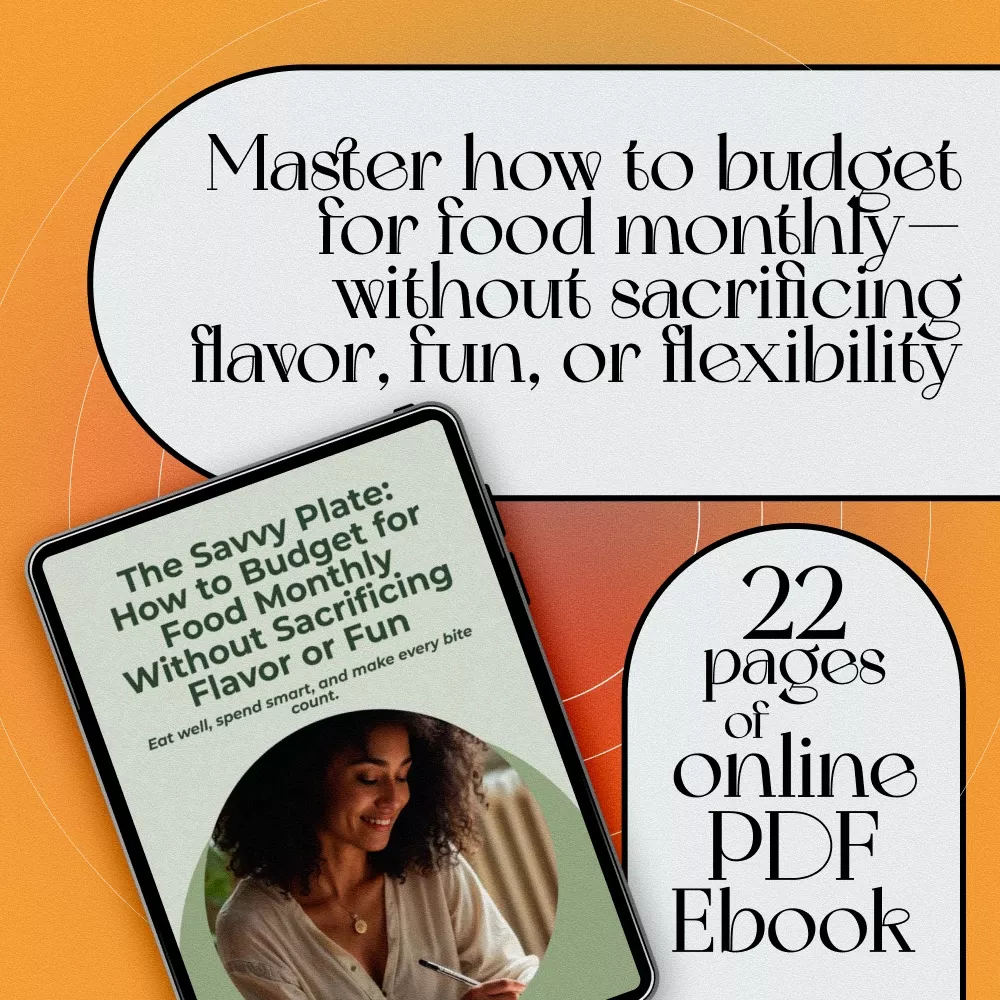
Then check your pantry, fridge, and freezer before writing the week’s grocery list. Our Savvy Plate budgeting eBook pairs monthly meal planning with a smart grocery checklist, so you can keep the monthly limit in mind without deciding every meal weeks in advance.
Featured in this guide
The Savvy Plate: How to Budget for Food Monthly Without Sacrificing Flavor or Fun | Budgeting eBook, Monthly Meal Planning Guide, Smart Grocery Checklist
Group your list by produce, proteins, pantry items, dairy or alternatives, and frozen foods. Add quantities where you tend to overbuy: “two onions” is more useful at the store than “onions.” Compare unit prices across package sizes, but choose the larger one only if you can store and use it.
Keep ingredients you enjoy in the plan. Beans, eggs, rice, pasta, frozen vegetables, and familiar seasonings can support flexible meals according to your tastes and dietary needs. You might also budget for a sauce, herb, or cheese that makes those meals appealing. If you include household supplies on the same shopping trip, track them separately from food; our reusable kitchen cleaning cloths are one such separate purchase.
Decide which food experiences matter to you this month, whether that is dinner out, a baking project, or a favorite snack. Giving them a place in the budget helps you make deliberate choices rather than treating every treat as a mistake.
At the end of each week, compare what you spent with what remains. If a week runs high, adjust a later shopping trip or meal plan. Note what you enjoyed, what went unused, and whether your cushion was enough. Use those observations to set next month’s number.
Watch · product page video
“The Savvy Plate really helped me as a busy parent who loves good food but hates overspending. My kids are even getting into it with their favorite recipes now included in our monthly plan!”
Obsessian product page · Product review
It means making informed choices with the money you have. For food, that includes knowing your limit, checking what you already own, comparing useful options, and spending intentionally on foods you enjoy.
Five useful components are income, fixed expenses, variable expenses, savings or debt goals, and a cushion for irregular costs. Food generally falls under variable expenses, where a monthly target can help you manage it.
There is no single universally accepted 3-3-3 rule for savings; different sources use the phrase for different methods. If you encounter one, review its specific steps against your income, essential expenses, and savings goals before adopting it.



Leave a comment