63% off on product page · save $70.96
Electrical Lockout Tagout Kit: 47-Piece Safety Guide

Unexpected energization, startup, or release of stored energy can cause serious injury while equipment is being serviced. Authorized employees use energy-control procedures and appropriate lockout or tagout devices to help keep equipment isolated until work is complete.
It offers a way to add lockout resources to your workplace, whether you are organizing a maintenance area or reviewing the supplies available to authorized employees.
Before using any kit, identify the isolation points involved in your work and confirm that the devices you select are suitable for them. A device is only one part of the process: your team also needs an established procedure and the skills to apply it safely.
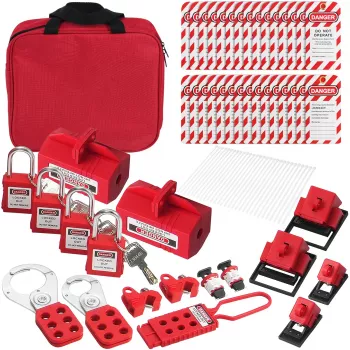
Start with the equipment, not the piece count. Identify each energy-isolating device in your procedure and select lockout devices that fit and can secure it. Do not assume a kit will fit every breaker, switch, or other isolation point.
Consider how many isolation points and authorized employees are involved, and whether group lockout procedures apply. Your employer’s procedure should establish how each worker is protected and how devices are applied and removed.
Featured in this guide
Electrical Lockout Tagout Kit – 47-Piece Complete Safety Set
This is a general framework. Authorized personnel must follow the employer’s equipment-specific procedure and applicable safety requirements.
Electrical equipment can also present mechanical, pneumatic, hydraulic, thermal, or other hazards. A disconnected machine may still have a component that can move or a system under pressure. Identify and control every applicable source.
Keep devices accessible to authorized employees and inspect them before use. Take damaged or unsuitable devices out of service and replace them according to your workplace process. Maintain equipment-specific procedures and provide training appropriate to each employee’s role.
Our team recommends reviewing your program against employer requirements and applicable OSHA standards, including electrical safety requirements where relevant.
For general workplace housekeeping, we also offer Premium Checkered Kitchen Cleaning Cloths – Absorbent & Reusable Towels. Keep ordinary cleaning supplies separate from electrical work and follow your workplace’s cleaning and equipment-safety procedures.
Before choosing, compare the product details with your daily routine, available space, care needs, and preferred setup. The strongest option is usually the one that fits the intended use clearly and remains simple to clean, store, and check before repeat use.
It is also worth checking measurements, material notes, included parts, and compatibility details so the item matches the way it will be used after delivery.
Yes. Electricians and other authorized employees use energy-control procedures when servicing equipment where unexpected energization or release of stored energy could cause injury.
A general sequence is to prepare, notify affected employees, shut down equipment, isolate energy sources, apply devices, control stored energy, and verify isolation. Authorized employees must follow the equipment-specific procedure and applicable requirements.
OSHA’s energy-control standard generally requires employers to establish procedures, train employees, conduct periodic inspections, and verify isolation before servicing covered equipment. Electrical safety requirements may also apply.
This usually refers to energy sources rather than types of lockout: electrical, mechanical, hydraulic, pneumatic, chemical, and thermal. Identify all hazardous energy sources applicable to each task.




Leave a comment