20% off on product page · save $3.00
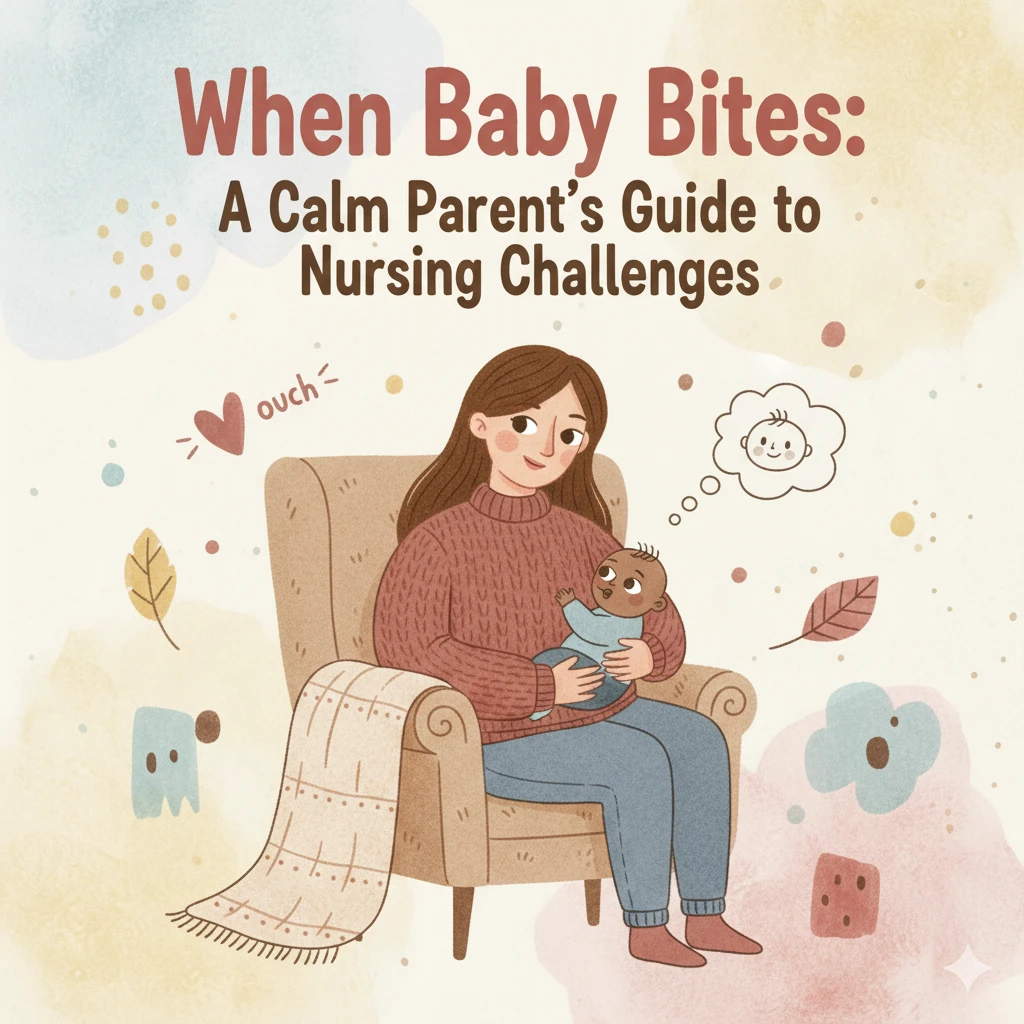
When Baby Bites: A Calm Guide to Nursing Challenges
Why Babies May Bite While Nursing
Babies may bite for several reasons, and it isn’t always possible to pinpoint one cause. Teething discomfort, a shallow latch, distraction, or reaching the end of a feed may all play a part. Sometimes a baby changes how they hold the breast as their attention shifts or their feeding pattern changes.
Notice what happens just before a bite. Is your baby actively swallowing, looking around, or beginning to pull away? Does it happen more often at a certain time of day? These observations can help you adjust your approach or give a lactation professional useful details.
For more guidance on feeding through teething, see the NHS advice on breastfeeding and teething.
When Baby Bites: A Calm Parent’s Guide to Nursing Challenges | Digital Download | Breastfeeding Support eBook, Teething Help, Nursing Checklist for Moms
View product
What to Do in the Moment
If the skin is damaged or nursing remains painful, contact a lactation professional or healthcare provider. If teething discomfort seems likely, you can offer a chilled, not frozen, teething toy before nursing.
Check the product’s listed specifications when evaluating what to do in the moment.
A Simple Nursing Checklist
You don’t need to change everything at once. Choose one or two adjustments and notice how the next few feeds go.
- Watch the timing. Notice whether biting happens at the beginning, during active feeding, or as your baby slows down.
- Look at positioning and latch. A comfortable, well-supported position can help. A lactation professional can assess your baby’s latch.
- Reduce distractions. If your baby keeps turning toward noises or movement, try a quieter place to nurse.
- Plan for pauses. If your baby seems distracted or finished, gently end the feed rather than waiting for a bite.
- Make comfort a priority. Take breaks as needed and seek personalized support if nursing remains painful.
Check the product’s listed specifications when evaluating a simple nursing checklist.
Support to Keep Close at Hand
It focuses on breastfeeding support, teething help, and a nursing checklist you can refer to as you navigate feeding challenges.
We also offer Premium Checkered Kitchen Cleaning Cloths – Absorbent & Reusable Towels for everyday household cleanup. They’re a separate household item, not a treatment for nipple injury.
Our guide can complement the advice you receive, but it doesn’t replace personalized care from a healthcare provider or lactation professional. If a suggestion doesn’t feel comfortable or your situation is changing, you can ask for help tailored to you and your baby.
When to Ask for Extra Help
Reach out to a lactation consultant or healthcare provider if biting keeps happening, nursing hurts, your nipple is damaged, or you’re concerned about how your baby is feeding. A professional can assess latch and positioning and help you make a plan.
Seek prompt medical advice if you develop a fever or notice worsening redness and pain, which may be signs of infection.
Check the product’s listed specifications when evaluating when to ask for extra help.
Before choosing, compare the product details with your daily routine, available space, care needs, and preferred setup. The strongest option is usually the one that fits the intended use clearly and remains simple to clean, store, and check before repeat use.
It is also worth checking measurements, material notes, included parts, and compatibility details so the item matches the way it will be used after delivery.
Before choosing, compare the product details with your daily routine, available space, care needs, and preferred setup. The strongest option is usually the one that fits the intended use clearly and remains simple to clean, store, and check before repeat use.
FAQ
What do you do when a baby bites?
Calmly pause the feed and use a clean finger to gently break suction before removing your baby from the breast. Check for injury and seek help if biting or pain continues.
What do bed bug bites look like on a baby?
Bed bug bites may appear as small, itchy, red or raised spots, sometimes in a line or cluster, but their appearance alone cannot confirm the cause. Contact your baby’s healthcare provider if you’re concerned about a rash or skin reaction.
What are baby bites?
In a nursing context, baby bites are moments when a baby closes their gums or teeth on the breast during a feed. They can happen for different reasons, including distraction or teething discomfort.
See if When Baby Bites: A Calm Parent’s Guide to Nursing Challenges | Digital Download | Breastfeeding Support eBook, Teething Help, Nursing Checklist for Moms fits your setup
View product









Leave a comment