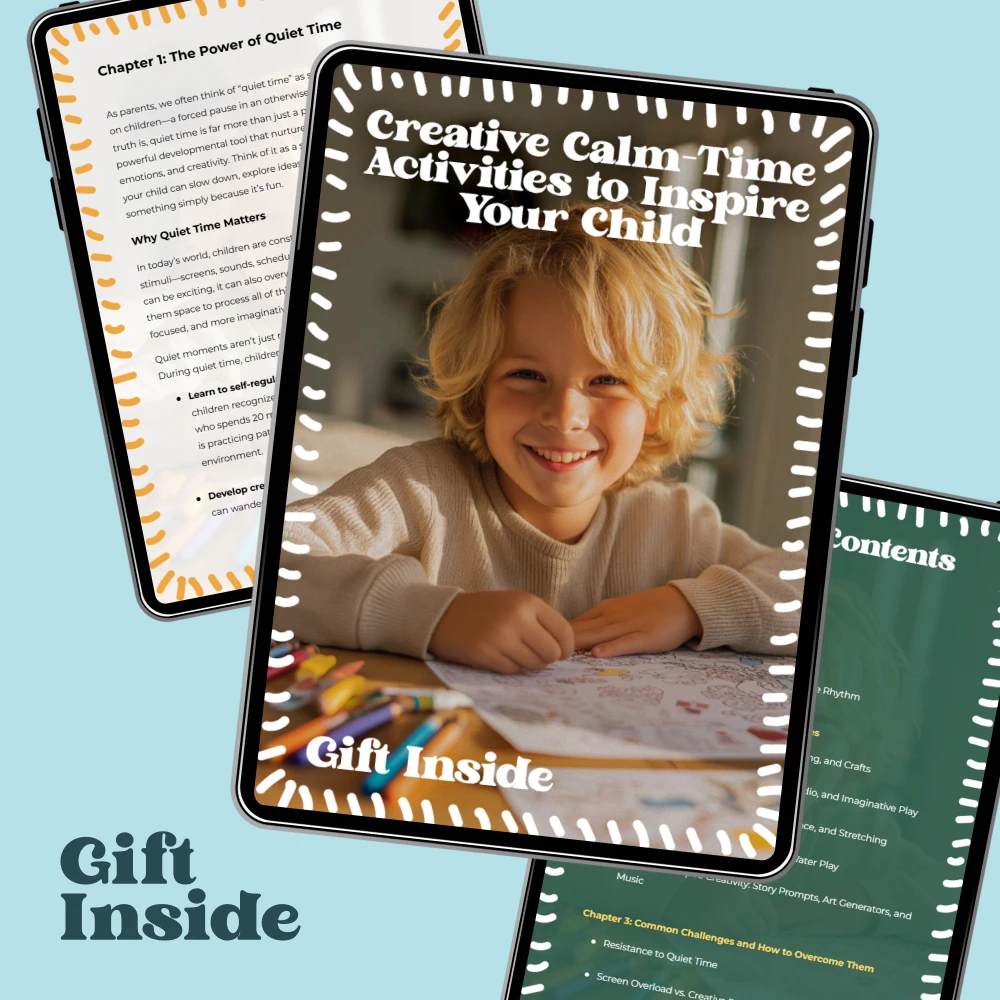
25% off on product page · save $4.00
10 Creative Calm-Time Activities for Kids, No Screens Needed
Choose a predictable window, such as after school or before dinner, and start with 10 to 15 minutes. Watch how your child responds: some children settle in quickly, while others need a shorter start or more time to finish what they are making. Age can help guide your expectations, but your child’s response matters most. The CDC’s developmental milestones offer a helpful reference for thinking about age-appropriate activities.
Set out materials before you begin, then offer two choices: “Would you rather draw patterns or build with blocks?” Brief invitations leave more room for imagination than detailed instructions. Calm time can be independent or shared, too. A younger child may feel more comfortable with an adult nearby, while a child with energy to spare may prefer to begin with slow movement.
If the routine meets resistance, try changing the setting before changing the activity. A cleared corner of the table, a spot by the window, or a blanket on the floor may make it easier to begin. It is fine to keep the same favorite activity available for days at a time.
Try these as invitations, not projects that must be completed. Repeating a familiar favorite can feel easier than starting something new. Choose age-appropriate supplies, and supervise small objects, scissors, glue, and water as needed.
Screen-free calm-time ideas
| Activity | Simple setup | Creative invitation |
|---|---|---|
| Story stones | Draw simple pictures on smooth stones or paper circles. | Pick three and tell a story connecting them. |
| Quiet collage | Set out scrap paper, a glue stick, and old magazines. | Make a picture of a cozy place. |
| Pattern drawing | Provide paper and crayons. | Fill a page with repeating lines, shapes, or colors. |
| Nature tray | Collect safe leaves, pinecones, and other finds. | Sort them by texture or arrange a tiny landscape. |
| Build a small world | Offer blocks, fabric scraps, and toy figures. | Create a home for an imaginary visitor. |
| Picture-book remix | Choose a familiar picture book. | Draw a new setting for one character. |
| Cloud or shadow sketches | Sit by a window or outdoors with paper. | Draw the shapes you notice or imagine. |
| Gentle stretching story | Clear a little floor space. | Move slowly like characters traveling through a story. |
| Paper weaving | Prepare wide paper strips for younger children. | Weave colors into a simple mat. |
| Sound map | Provide paper and a pencil. | Draw marks for the sounds you hear for two minutes. |
Match the invitation to the moment. After a busy day, listening and sketching may feel manageable; on a restless day, a stretching story might be a better first step. A child who wants company could take turns telling a story with you, while one who wants space can work beside you without conversation.
Featured in this guide
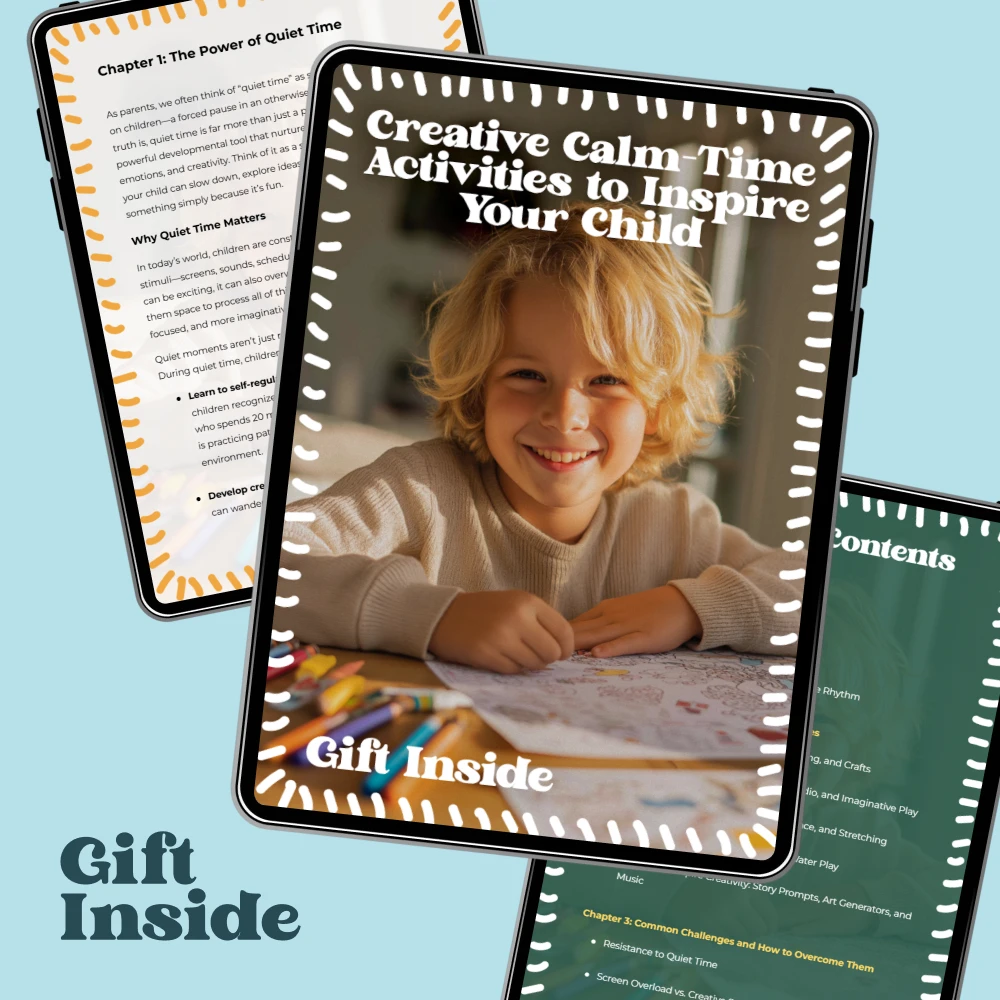
Creative Calm-Time Activities to Inspire Your Child | A Practical Guide to Creative Quiet Time Activities for Kids | Screen-Free Calm, Focus & Imagination
None of these ideas needs a polished ending.
Keep a small basket of supplies nearby, but set out only a few items at once. If your child loses interest, they can stop, switch activities, or take a break. When you join in, describe what you notice—“You used lots of curved lines”—rather than rating the result.
If your child is upset, offer comfort and connection first. An activity may be welcome later, but it is not a substitute for listening to what is wrong.
Household materials are enough for every activity above. If you would prefer a collection of guided ideas, the Creative Calm-Time Activities to Inspire Your Child guide offers a dedicated starting point for screen-free quiet time. Consider whether your child prefers open-ended invitations or more structure, and keep homemade favorites in the mix.
For collage and other tabletop projects, a reusable surface cloth can make setup and cleanup simpler. The Premium Checkered Kitchen Cleaning Cloths are an optional practical addition, not a requirement for creative play.
One common grounding version invites a child to name three things they see, three sounds they hear, and three body parts they can move. Offer it gently if it appeals to them; it is not a rule every child must follow.
Children can make collages, tell stories with picture stones, build small worlds, or draw imagined places. Leave room to explore rather than aiming for a particular finished result.



Leave a comment