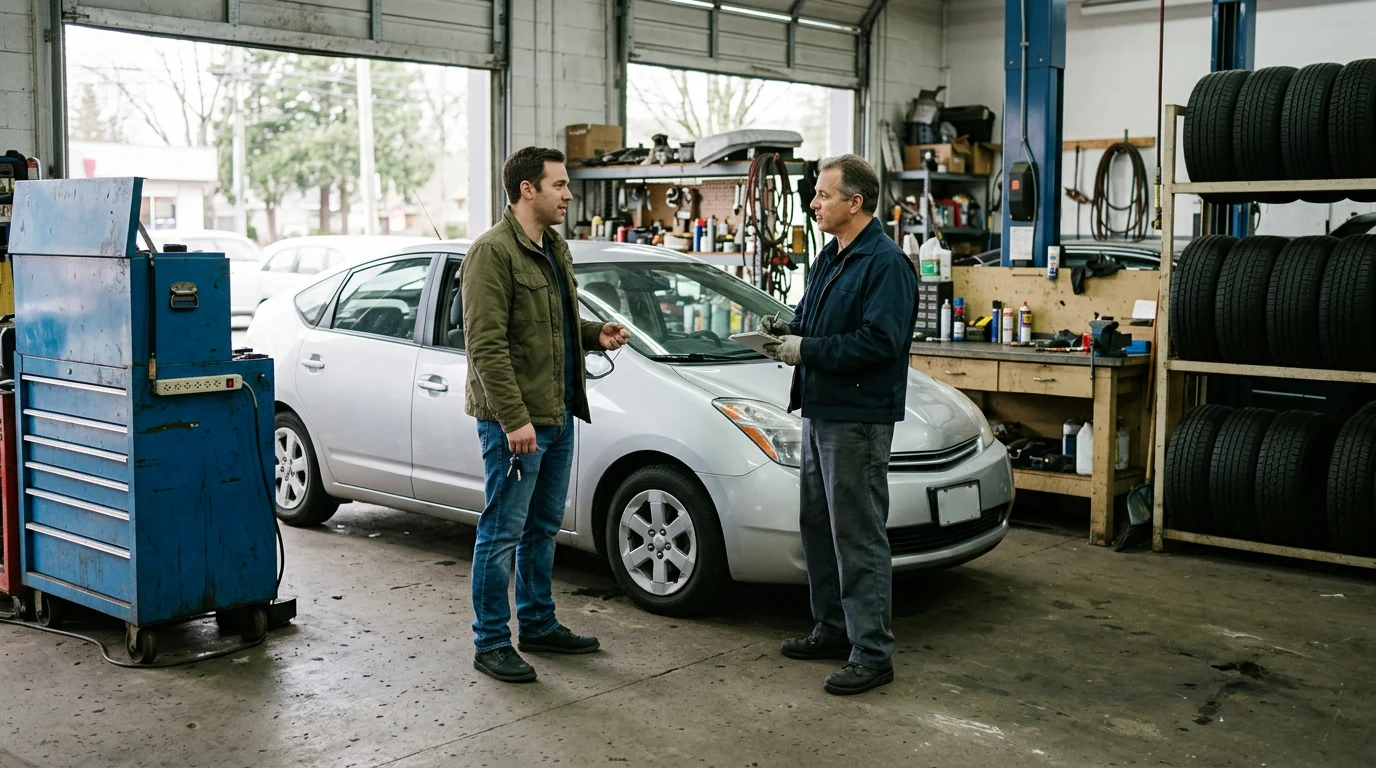
Start with the maintenance schedule for your vehicle’s year, make, and model. Then ask the shop to itemize its recommendation. “Which services are due now?” is a more useful question than “Do I need a tune-up?” It gives you a way to compare the proposed work with your owner’s manual and service records.
Match the work to your car
Spark plugs, filters, and fluid checks may all come up in a tune-up conversation, but their intervals vary by vehicle. Some items need inspection before replacement. Review your past invoices, too: work completed recently may not be due again.
Frequent short trips, prolonged idling, towing, or dusty conditions may affect which maintenance schedule applies. Tell the shop how you use your car and ask which schedule supports its recommendation. We would ask for an itemized estimate rather than approve a package by name alone.
Featured in this guide
Does Your Car Really Need Tune-Ups? A Complete Guide to Understanding and Scheduling Your Car’s Tune-Up Needs
Rough idle, hard starts, hesitation, or an unexpected change in fuel use warrants attention, but none identifies a failed part on its own. Tell the technician when the symptom occurs, whether it began after recent service, and whether a warning light is on. Ask what testing supports any proposed repair.
A flashing check-engine light needs prompt attention. It can signal an active misfire, and continued driving may cause additional damage. Find a safe place to stop and seek professional help rather than driving through the problem.
Before you approve the estimate
Ask which services are due at your current mileage, which driving schedule applies, and which recommendations address a diagnosed problem. Confirm the parts, labor, and diagnostic charges, and ask the shop to contact you before doing additional work.
Keep the final invoice with the mileage and completed services. It gives you a clearer starting point the next time you review your schedule or discuss a new symptom.
Make a plan you can follow
Note your current mileage, review the applicable maintenance schedule, record completed services, and set a reminder for the next inspection or replacement interval. When a new symptom appears, record when it happens and arrange diagnosis separately from routine maintenance. That small amount of preparation makes your conversation with a shop more specific.
The practical rule is simple: maintain your car on schedule, investigate symptoms, and authorize work for a clear reason.
Check the product’s listed specifications when evaluating make a plan you can follow.
Before choosing, compare the product details with your daily routine, available space, care needs, and preferred setup. The strongest option is usually the one that fits the intended use clearly and remains simple to clean, store, and check before repeat use.
It is also worth checking measurements, material notes, included parts, and compatibility details so the item matches the way it will be used after delivery.
FAQ
What is the $3000 rule for cars?
It is a repair-cost rule of thumb, not a maintenance standard. Compare a written estimate with your car’s condition, value, and expected future costs rather than treating $3,000 as an automatic cutoff.
What is youcar?
“Youcar” is not a standard automotive maintenance term. If you saw it on an estimate or service reminder, ask the source what it means before approving work.
See if Does Your Car Really Need Tune-Ups? A Complete Guide to Understanding and Scheduling Your Car’s Tune-Up Needs fits your setup










Leave a comment