Dog Collar Chafing: Soothe the Skin and Stop the Rubbing
Nathan Brown · 6 min
Check the Skin Before Adjusting the Collar
Remove the collar and gently part the fur all the way around your dog’s neck. Look for redness, thinning or missing hair, broken skin, swelling, discharge, or an unusual odor. Notice how your dog responds, too. Flinching, pulling away, or repeatedly scratching at the spot can signal discomfort even when the irritated area is hard to see.
Contact your veterinarian promptly if the skin is open, there is discharge, your dog seems significantly painful, or redness is spreading. Make an appointment if the irritation persists or keeps coming back. A collar may be rubbing the area, but it is not the only possible cause: allergies, infection, and other skin conditions can also affect the neck. VCA Animal Hospitals’ overview of hot spots in dogs explains why a moist, inflamed patch deserves attention rather than more friction.
Give the sore area a break
When you can supervise your dog safely, remove the collar that is rubbing. Keep appropriate identification and a secure way to control your dog when needed; a collar-free break should not create an escape risk.
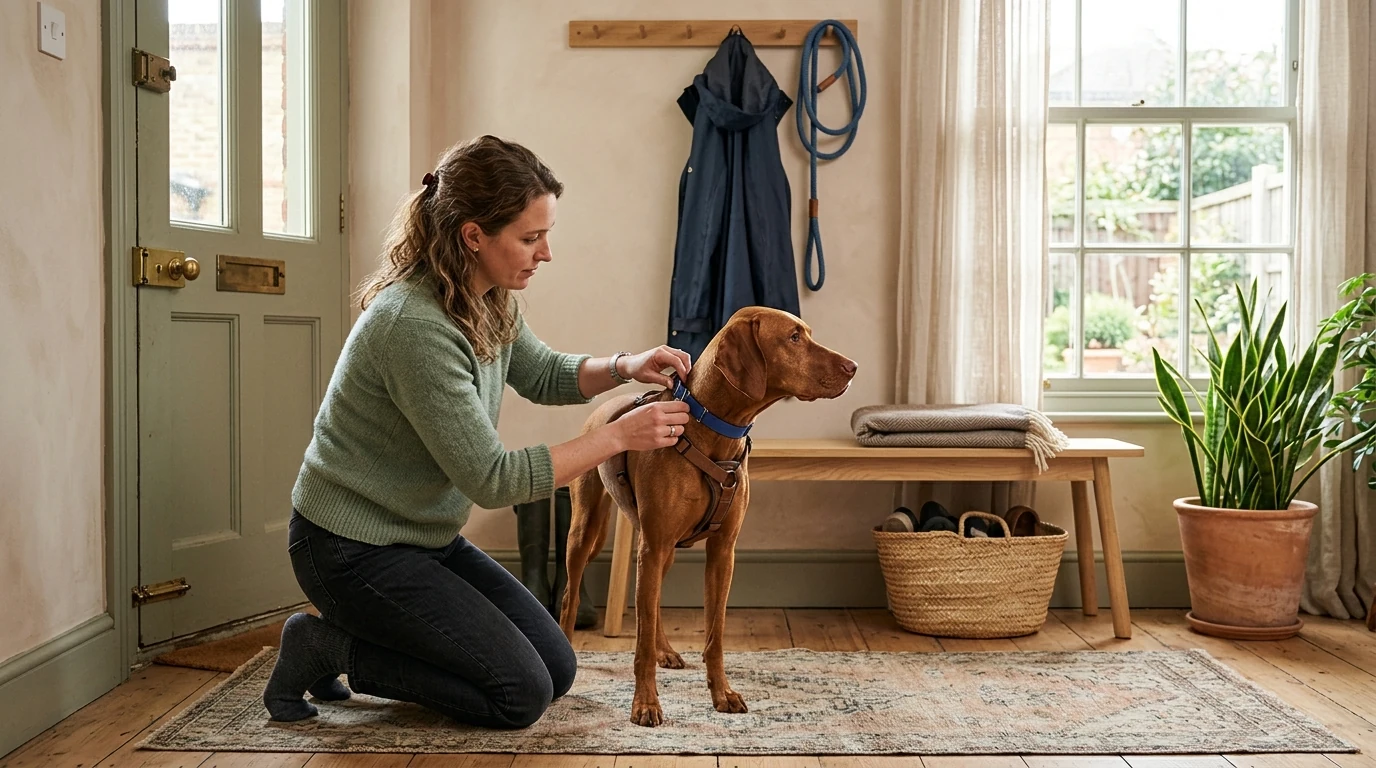
Keep the area gently clean and dry. Do not apply human creams, fragrances, or disinfectants unless your veterinarian advises you to. If your dog needs leash walks, a properly fitted harness may shift leash pressure away from the neck. Check every harness contact point, and avoid one that rubs another sore area.
Featured in this guide
How to Stop Dog Collar Chafing for Good – Dog Owner’s Ultimate Guide | Prevent & Treat Chafing | eBook on what to do when a collar causes chafing | Perfect Fit, Healing Tips & No-Tug Training Plan
Run your fingers along the collar’s edges and hardware. Feel for rough spots, and note whether a buckle presses repeatedly against one place. Check for trapped fur, dampness, and excessive sliding. The collar needs to stay secure without pressing tightly into the skin; reassess it after grooming, growth, or weight changes.
Watch what happens on a walk, too. If irritation appears after leash tension, a suitable harness and reward-based loose-leash practice may help reduce repeated pressure. Training is not a treatment for an existing sore, so address the skin and friction first.
Make prevention a small routine
Look beneath the collar regularly, especially after wet outings and longer walks. Dry both fur and collar before putting a damp collar back on. Clean the collar according to its care instructions, and replace it if an edge becomes rough or a part is damaged.
For a reference you can return to, our How to Stop Dog Collar Chafing for Good eBook brings together fit checks, healing tips, prevention steps, and a no-tug training plan. It does not replace veterinary care for painful, worsening, or persistent skin changes.
Keep the Steps Together
If you prefer a single reference for fit checks, healing tips, prevention steps, and a no-tug training plan, our How to Stop Dog Collar Chafing for Good eBook brings those everyday decisions together. It can help you stay consistent as you adjust your routine. It does not replace veterinary advice for painful, worsening, or persistent skin changes.
There is no universal list of three meats every dog must avoid. Avoid spoiled or seasoned meat, and ask your veterinarian about foods that are safe for your individual dog; meat choices will not resolve collar chafing.
What color calms dogs’ anxiety?
No particular color reliably calms every dog. If walks are stressful, focus on your dog’s behavior and a comfortable, non-rubbing setup rather than choosing collar color as a solution.
What punishment do dogs hate the most?
Dogs can find harsh punishment frightening or confusing, and it is not a good way to address pulling. We recommend reward-based loose-leash practice instead, alongside care for any sore skin.
What do dogs hear when we talk to them?
Dogs hear your words and tone, though they do not understand conversation as people do. Clear, consistent cues and rewards can help your dog learn to walk without sustained leash tension.
See if How to Stop Dog Collar Chafing for Good – Dog Owner’s Ultimate Guide | Prevent & Treat Chafing | eBook on what to do when a collar causes chafing | Perfect Fit, Healing Tips & No-Tug Training Plan fits your setup









Leave a comment