×
Back to menu
HomeBlogBlogHow to Babyproof Your House Room by Room

How to Babyproof Your House Room by Room

How to Babyproof Your House Room by Room

15% off on product page · save $1.94

How to Babyproof Your House Room by Room

Nathan Brown · 6 min

How to Babyproof Your House Room by Room

Start at your baby’s eye level

Walk through the spaces where your baby spends time, then get down low enough to see what is visible and reachable from the floor. Look for dangling cords, loose batteries and other small objects, sharp edges, open cabinets, and furniture that could move or tip. Check under sofas and along baseboards, too: small items can end up there even after the rest of a room looks tidy.

Sort what you find into three groups: hazards to address now, supplies or installation work to plan, and areas to revisit when your baby gains a new skill. Give the people who care for your child the same short list so everyone knows what has changed. Babyproofing reduces risks; it does not replace active supervision.

Address the most serious hazards first

Anchor furniture and televisions that could tip, using hardware suited to each item and wall and following its installation instructions. Lock away medicines, cleaning products, button batteries, and other hazardous items; a high shelf alone may not stay out of reach.

Inspect stairs, windows, and access to water next. Choose a gate appropriate to its location and install it as directed. Move climbable furniture away from windows, and never leave your baby unattended near a bath or another container of water.

Featured in this guide

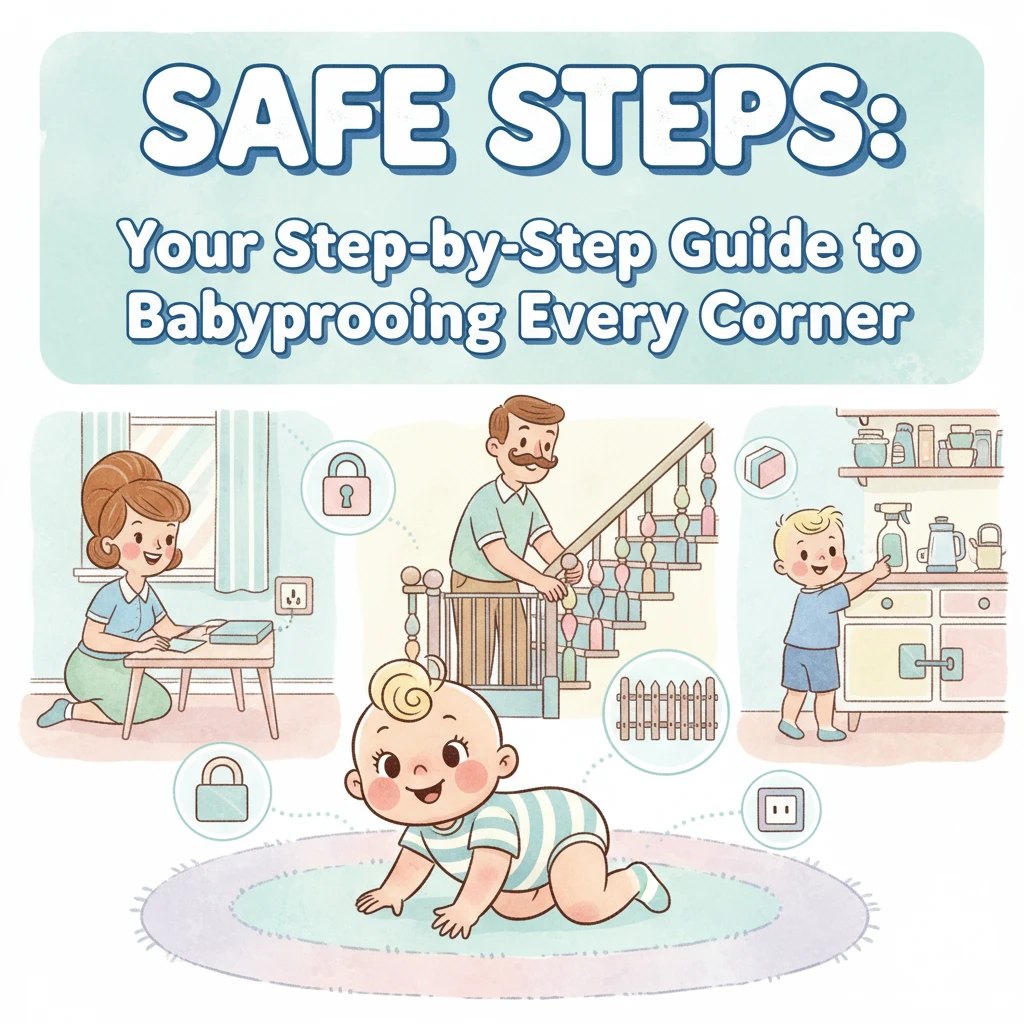
Safe Steps: Your Step-by-Step Guide to Babyproofing Every Corner | Printable Home Safety Guide | Digital Download eBook for New Parents | how to babyproof house step by step

View product

Make a room-by-room pass

Start where your baby spends time, then include spaces they may enter as they become more mobile.

  • Living areas: Anchor tip-prone furniture and TVs, move cords out of reach, and clear small objects from floors and low surfaces.
  • Kitchen: Store sharp tools and cleaners securely, and keep hot items away from counter edges.
  • Bathroom: Secure medicines and toiletries, supervise every bath, and empty water containers after use.
  • Bedroom and nursery: Keep cords out of reach, anchor furniture, and review the sleep space.
  • Stairs and entryways: Install gates suited to the opening and regularly clear tracked-in small objects.

Repeat the walk from your child’s height after making changes. A cord or small object that looks tucked away to you may still be reachable from the floor.

Keep the plan useful as your child grows

Revisit rooms when your child gains a new skill, after furniture moves, and when visitors or new items change what is within reach. An open drawer can become a foothold even when its contents are harmless.

Our Safe Steps digital, printable home safety guide gives you a way to organize a room-by-room pass and the tasks still to do. Continue to follow the installation instructions for each safety product you use. For everyday cleanup, our reusable kitchen cleaning cloths can help you keep surfaces tidy, but cleaning supplies and small items still need secure storage after the job is done.

Share changes with caregivers

Keep a short list of unfinished fixes where caregivers can use it. Tell them when a gate has moved, a lock needs repair, or a room has a newly reachable hazard. A recurring reminder can help you review anchors, gates, locks, and cords, but do another sweep whenever your child’s abilities change.

You can use the Safe Steps digital guide as a structured starting point. The goal is a plan you keep updating, not a checklist you finish once.

FAQ

What are the 3 R’s for stopping domestic violence?

There is no single universally used “3 R’s” rule. If you are experiencing domestic violence, prioritize your immediate safety and contact a local domestic violence service for confidential help with your options; call emergency services if you are in immediate danger.

How does a safe place work?

In a home-safety context, a safe place is an area you have checked for hazards appropriate to your child’s current abilities, while you continue to supervise them. If you mean a refuge from violence, a local domestic violence service can help you explore safer options confidentially.

What are the cycle of abuse stages?

The cycle of abuse is often described as tension building, an abusive incident, reconciliation, and a calm period, but abuse does not always follow a predictable pattern. If this question relates to your safety, a domestic violence service can help you assess your situation without requiring it to fit a model.

See if Safe Steps: Your Step-by-Step Guide to Babyproofing Every Corner | Printable Home Safety Guide | Digital Download eBook for New Parents | how to babyproof house step by step fits your setup

View product

Leave a comment

Why obsessian.com?

Uncompromised Quality
Experience enduring elegance and durability with our premium collection
Curated Selection
Discover exceptional products for your refined lifestyle in our handpicked collection
Exclusive Deals
Access special savings on luxurious items, elevating your experience for less
EXPRESS DELIVERY
FREE RETURNS
EXCEPTIONAL CUSTOMER SERVICE
SAFE PAYMENTS
Top

Shopping cart

×