Request the vehicle identification number (VIN) and obtain an available vehicle history report. The Federal Trade Commission’s used-car buying guidance recommends reviewing a vehicle history report, but a report is not a complete maintenance log. Service visits may never appear on it. Ask whether a dealer, repair shop, or previous owner can provide additional documentation.
Missing paperwork does not automatically mean service was missed. It does mean you have less evidence. Keep track of what is documented, what the seller can explain, and what remains uncertain.
Build a service timeline
Sort invoices by date and odometer reading. Mileage should progress plausibly; a conflicting reading needs an explanation. Mark stretches with no documentation, then compare recorded work with the manufacturer’s maintenance schedule for that car’s year, model, and applicable driving conditions.
Keep routine service separate from repairs. If several invoices describe the same warning light, noise, or other symptom, ask what was repaired and whether the problem returned. Missing paperwork is not proof that service was missed, but it does leave you with less evidence.
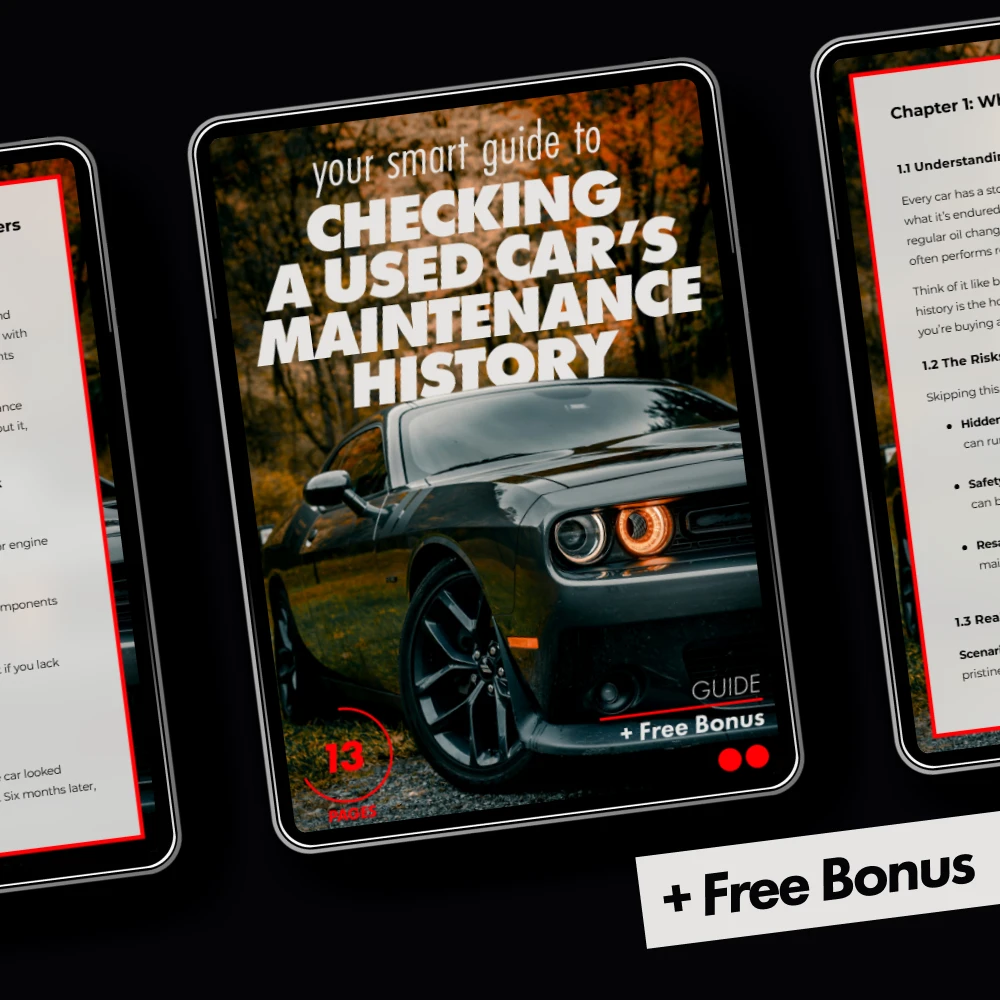
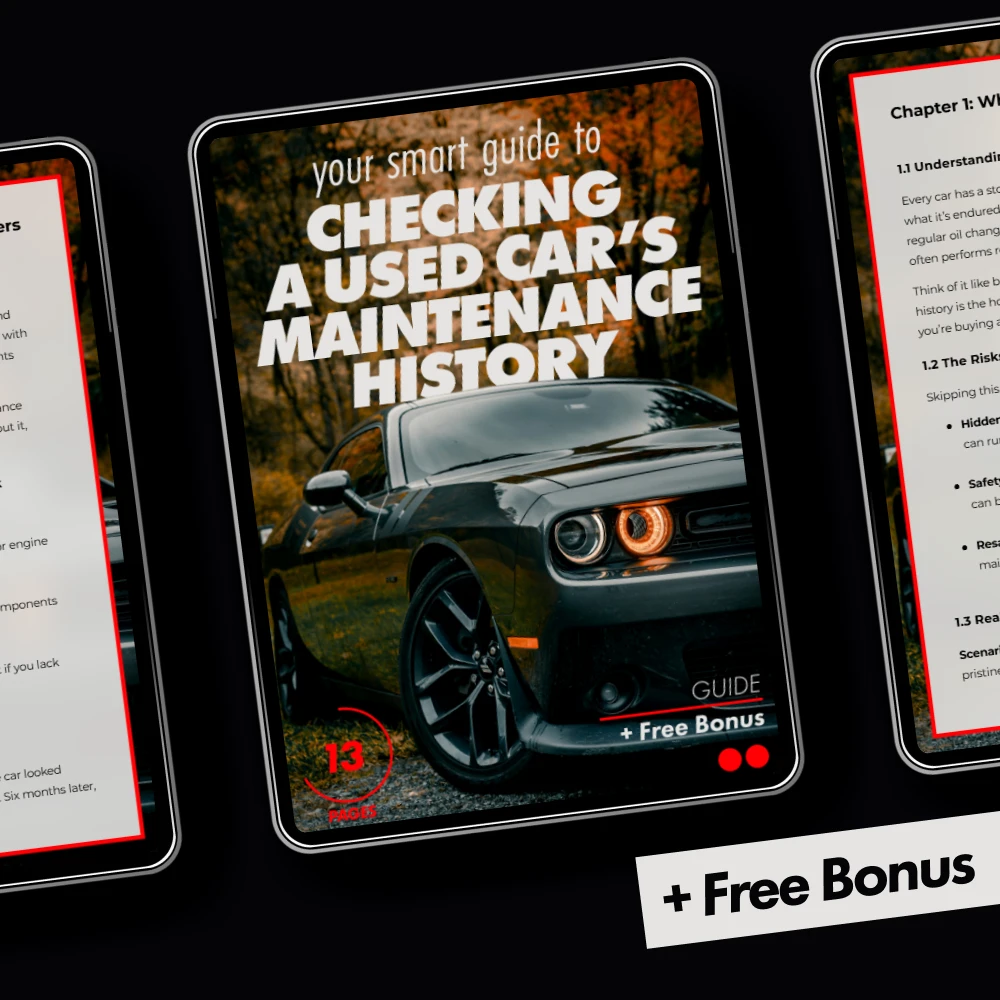
Featured in this guide
Your Smart Guide to Checking a Used Car’s Maintenance History – A Comprehensive Digital Guide for Savvy Car Buyers
Confirm that the VIN on the records matches the vehicle. Compare the latest recorded mileage with the odometer, allowing for miles driven since that visit but asking about any difference you cannot explain.
A vehicle history report can add context, though it may omit service visits. Use the VIN to check for open safety recalls through the National Highway Traffic Safety Administration, and ask how any outstanding recall will be addressed. Arrange an independent pre-purchase inspection even when the records look complete: invoices describe past work, while a qualified mechanic can assess the car now.
Make the next conversation count
Bring specific questions instead of asking only, “Has it been maintained?” Point to the invoice for a repeated repair, a gap in service dates, or a major item missing from the documented history. If records are incomplete, focus on what you can verify through invoices, a vehicle history report, the test drive, and an inspection. You can also ask what documentation the seller can still obtain.
Before choosing, compare the product details with your daily routine, available space, care needs, and preferred setup. The strongest option is usually the one that fits the intended use clearly and remains simple to clean, store, and check before repeat use.
It is also worth checking measurements, material notes, included parts, and compatibility details so the item matches the way it will be used after delivery.
Before choosing, compare the product details with your daily routine, available space, care needs, and preferred setup. The strongest option is usually the one that fits the intended use clearly and remains simple to clean, store, and check before repeat use.
FAQ
What does smart checking mean?
In banking, it usually refers to a checking account with digital tools or features; the exact meaning depends on the bank. For a used car, a smart check means comparing multiple sources of evidence rather than relying on one claim.
Why shouldn’t you keep more than $3000 in your checking account?
There is no universal $3,000 limit. Keep enough for upcoming bills and a comfortable buffer, then decide where to hold additional money based on access needs and account terms.
Which bank gets the most complaints?
That depends on the time period, complaint category, and whether you compare total complaints or complaints relative to bank size. Review current complaint data before drawing a conclusion.
Can I check my checking account balance over the phone?
Many banks offer balance information by phone, though procedures vary. Call the number published by your bank and expect to verify your identity.
See if Your Smart Guide to Checking a Used Car’s Maintenance History – A Comprehensive Digital Guide for Savvy Car Buyers fits your setup









Leave a comment