Mindfulness Meditation Made Simple: A Beginner’s Guide
A Simple Place to Begin
Mindfulness is the practice of paying attention to the present moment with curiosity rather than judgment. You might notice your breath, a sound nearby, or your feet on the floor. When your mind wanders, gently return to whatever you chose to notice.
Our Mindfulness Meditation Made Simple is a beginner-focused guide for you if you would like a starting point. You do not need a quiet room or an empty mind, and you can adjust your practice to fit your day.
Try a Five-Minute Mindful Pause
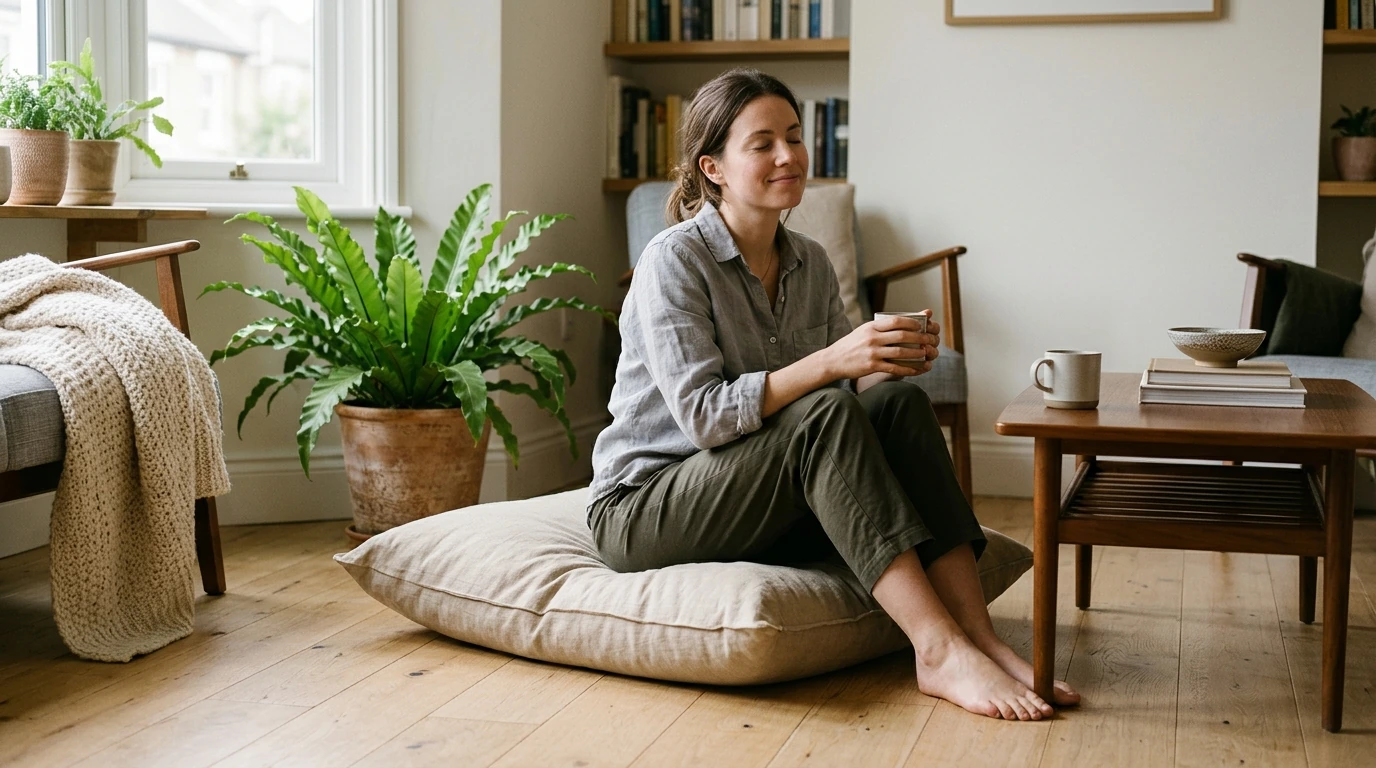
Sit comfortably, with your eyes closed or open and your gaze soft. Let your breath move naturally; there is no need to slow or deepen it.
- Minute 1: Settle into a comfortable position.
- Minutes 2–4: Notice your breath or another comfortable point of attention. Return gently when you notice your mind has wandered.
- Minute 5: Notice how you feel and take in your surroundings before returning to your day.
A timer is optional, and a shorter practice is fine. If focusing on your breath is uncomfortable, try listening to sounds or noticing contact with your chair. If the practice becomes distressing, stop or adjust it. Opening your eyes, moving around, or attending to your surroundings may feel more comfortable.
Mindfulness Meditation Made Simple – A Beginner’s Guide to Calm & Clarity
View product
Make Mindfulness Fit Your Day
Pairing a short pause with something you already do can make it easier to remember. You might notice the warmth of your morning drink before taking the first sip, or pause for a minute between work tasks. Start with a length of time that feels realistic, even if it is shorter than five minutes.
Mindfulness can also happen while you move. On a walk, notice the rhythm of your steps or the sounds around you. While washing your hands, pay attention to the temperature of the water and the sensation of your hands moving together. These ordinary moments give you an opportunity to practice without setting aside a separate block of time.
Everyday chores can provide another cue to slow down. For example, if you use our Premium Checkered Kitchen Cleaning Cloths – Absorbent & Reusable Towels to wipe a counter, you might briefly notice the movement of your hands and the texture of the cloth. The item itself is not necessary for mindfulness; the attention you bring to the moment is the practice.
Your mind will wander, and you may miss days. Both are normal. Returning when you can is more useful than treating a missed session as a failure. Consistency over time matters more than perfection, and your routine can change as your needs do.
What Mindfulness Can and Cannot Do
Research suggests mindfulness-based practices may help some people manage stress, but results vary and evidence differs by concern. No particular result is guaranteed.
Meditation is not a cure or a replacement for professional mental health care. If you experience persistent distress or have concerns about practicing, consider speaking with a qualified health professional.
Our beginner’s guide may suit you if you want a place to start exploring mindfulness at your own pace. You can also begin with the short pause above and decide what feels useful before choosing a guide.
Before choosing, compare the product details with your daily routine, available space, care needs, and preferred setup. The strongest option is usually the one that fits the intended use clearly and remains simple to clean, store, and check before repeat use.
It is also worth checking measurements, material notes, included parts, and compatibility details so the item matches the way it will be used after delivery.
FAQ
Where did mindfulness meditation originate?
Mindfulness meditation has roots in Buddhist traditions. Contemporary secular mindfulness draws on and adapts practices from those traditions for a variety of settings.
Is mindfulness meditation scientifically proven?
Research suggests mindfulness-based practices may help some people with stress and related concerns, but they are not guaranteed to work for everyone. Study quality and individual outcomes vary.
What is the best meditation for mindfulness?
There is no single best practice for everyone. You can start by noticing your breath, sounds, or contact with a chair and choose the focus that feels most comfortable.
Can Christians do mindfulness meditation?
Some Christians use secular attention practices or adapt quiet reflection to their faith. Beliefs and preferences differ, so you can choose an approach that aligns with your own convictions.
See if Mindfulness Meditation Made Simple – A Beginner’s Guide to Calm & Clarity fits your setup
View product









Leave a comment