35% off on product page · save $11.30
Make One Room Work Harder Without the Clutter

Start with the room’s daily jobs
Name the two or three activities the room needs to handle most often. Perhaps you work there on weekdays, eat there every evening, and welcome a guest occasionally. Plan for those uses first. Trying to accommodate every possible activity at once can leave you with furniture you rarely use and too little space for the things you do every day.
Next, walk through a typical changeover. If your dining table doubles as a desk, where will your laptop, papers, and charger go before dinner? A portable container may be more useful than adding another cabinet. If you relax in the room after work, consider whether you can clear the work surface without carrying supplies across the house.
Before moving or buying anything, measure the room, doorways, and furniture you already own. Note where doors swing, drawers open, and people need to walk. Marking furniture footprints on the floor with painter’s tape can help you see whether a layout leaves comfortable access to seating, storage, and exits.
Give each activity a flexible zone
A zone does not need a wall. A task lamp can define one end of a table as a workspace; a chair and reading light can create a quieter corner. Keep frequently used supplies near the activity they serve, while leaving walking paths clear.
Choose boundaries that can shift with your day. If you host occasionally, a movable side table may be more useful than a fixed piece that blocks the path when guests arrive.
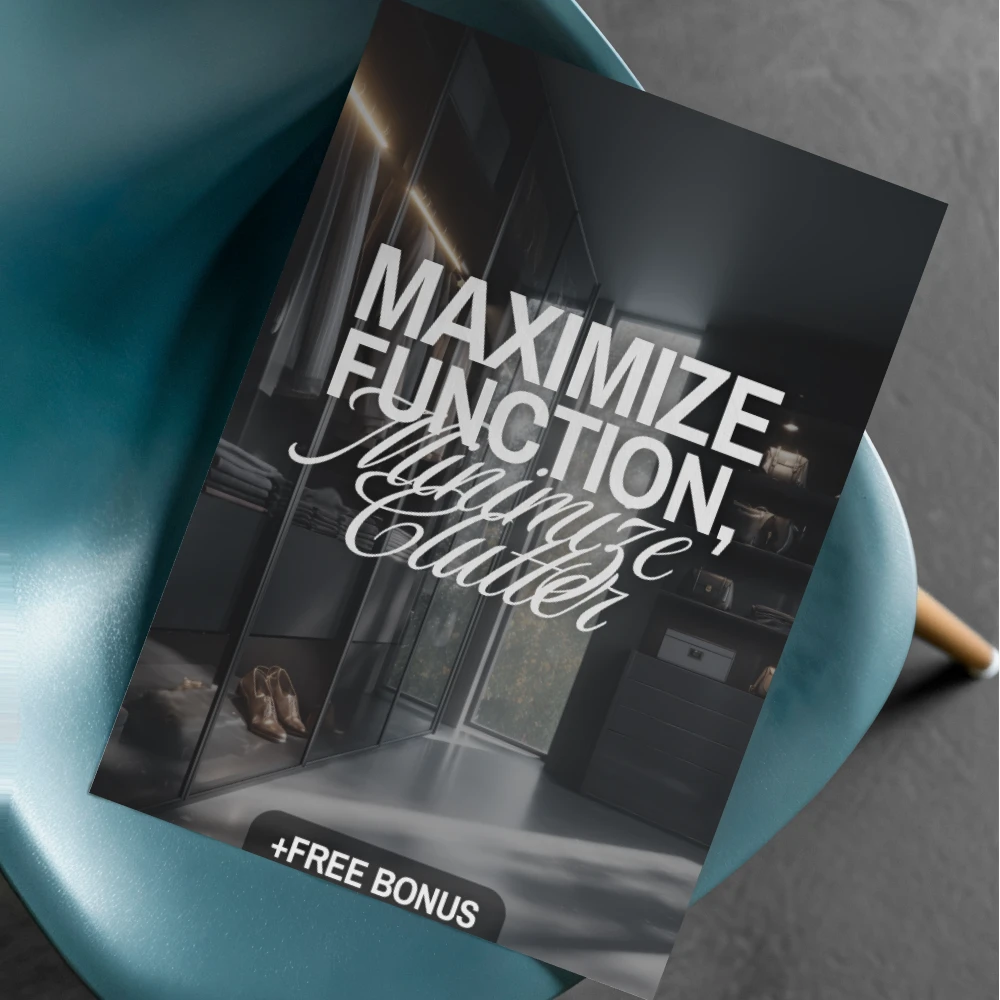
Maximize Function, Minimize Clutter | Multifunctional Room Layouts eBook | Small Space Design Guide | Space-Saving Furniture & Smart Home Ideas
View product
Choose furniture for its everyday value
An extra function earns its place only if you will use it. A table that suits both meals and focused work may replace a separate desk; storage inside a piece is less helpful if reaching it is awkward.
Measure folding, extending, or convertible furniture both when stored and when fully in use. Leave space to pull out chairs and open doors or drawers. If you are considering our Luxurious Bubble Cloud Sofa as your main seat, measure its planned footprint in the room and confirm that people can still move past it when others are seated.
Sketch your ordinary weekday arrangement and a second version for guests. Our Maximize Function, Minimize Clutter eBook offers layout and space-saving ideas to consider as you decide what suits your routine.
Live with the layout, then adjust
Keep work supplies together, give everyday essentials an easy-to-reach home, and reserve less accessible storage for things you use occasionally. Pair general lighting with focused light where you read or work.
Try the arrangement for a week. Notice where belongings repeatedly collect and whether the walking paths stay clear during each activity. A pile beside a chair may call for a small landing spot rather than a stricter tidying routine. We favor a room you can reset easily over one that works only when it is empty.
Before choosing, compare the product details with your daily routine, available space, care needs, and preferred setup. The strongest option is usually the one that fits the intended use clearly and remains simple to clean, store, and check before repeat use.
It is also worth checking measurements, material notes, included parts, and compatibility details so the item matches the way it will be used after delivery.
Before choosing, compare the product details with your daily routine, available space, care needs, and preferred setup. The strongest option is usually the one that fits the intended use clearly and remains simple to clean, store, and check before repeat use.
FAQ
What are the 7 types of functions?
In mathematics, lists of function types vary by curriculum and are separate from planning a multifunctional room. Here, focus instead on the few activities your room must support regularly.
What does g ◦ f mean?
In mathematics, g ◦ f means the composition of functions: apply f first, then apply g to the result. It is not a room-layout term.
What are the two types of optimization?
In mathematics, optimization is often framed as maximizing or minimizing a value. For a room, you can use that idea to make space more useful while reducing clutter and the effort needed to put things away.
What is maximize and minimize?
In a room layout, maximize means making available space more useful for daily activities. Minimize means reducing unnecessary furniture, visual clutter, and the work of resetting the room.
See if Maximize Function, Minimize Clutter | Multifunctional Room Layouts eBook | Small Space Design Guide | Space-Saving Furniture & Smart Home Ideas fits your setup
View product









Leave a comment